For brokers recommending level-funded and self-funded health plans, understanding how each arrangement manages claims costs and financial risks is crucial for advising clients.
Both options give employers greater control over their health benefits than a traditionally funded plan. However, the payment structures and contract provisions differ between them, which can influence how an employer budgets for healthcare expenses and manages a plan over time.
For brokers, understanding those differences is key to helping employers evaluate not only how a plan is funded, but what each approach could mean for their financial responsibilities and long-term plan management.
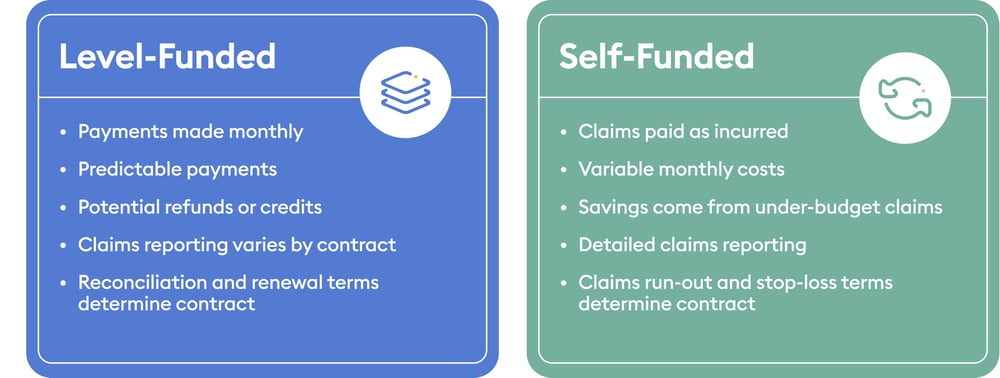
At a Glance: Level Funded vs. Self-Funded
What Is the Difference Between Level-Funded and Self-Funded Health Plans?
The primary difference is how employers fund healthcare claims.
Level-Funded Plans
Level-funded plans combine estimated claims costs, administrative fees, and stop-loss premiums into a fixed monthly payment. The employer’s financial responsibilities, including any potential savings or additional costs, depend on the terms of the contract.
Self-Funded Plans
Self-funded plans require employers to pay healthcare claims as they occur, with administrative fees and stop-loss premiums typically paid separately. Because claims costs vary from month to month, the employer’s total monthly spending can fluctuate.
What Benefits Do Both Models Carry?
Both funding arrangements commonly use stop-loss insurance to protect employers against unexpectedly high eligible claims.
Specific stop-loss coverage addresses eligible claims exceeding a defined threshold for an individual member, while aggregate stop-loss coverage provides protection when total eligible plan claims exceed an established amount.
Financial protection is one consideration, but brokers should also highlight to employers how they can benefit when claims spending is lower than expected.
One potential advantage of level-funded plans is the opportunity to receive money back when claims spending falls below projections.
Some agreements offer returns for a percentage of unused claims funds, and others provide renewal credits or require employers to meet additional conditions.
Since self-funded employers pay claims as they happen, they keep any savings for the next year but do not get any year-end refund.
For brokers, the important question is how each arrangement treats unused funding at the end of the contract period, which can significantly affect the financial value of a proposal.
What Claims Data and Reporting Can Employers Access?
Useful claims data availability should be part of the funding decision rather than an assumption based on the plan type.
Normally, self-funded arrangements provide detailed claims reporting, allowing employers to evaluate utilization and identify large cost drivers.
Level-funded plans may offer similar information, although reporting capabilities vary by administrator and contract.
Before recommending a plan, brokers should request examples of the reporting employers will receive. Reviewing the available information helps establish whether employers can effectively monitor spending and evaluate potential plan adjustments.
That includes reviewing available claims visibility alongside the contract terms that determine how employers can act on that information.
Which Contract Terms Should Brokers Review?
Several provisions deserve particular attention when evaluating level-funded and self-funded proposals.
- Reconciliation provisions: Understand how unused claims funds are calculated and whether refunds depend on renewal or other conditions.
- Claims run-out: Determine who is responsible for claims incurred during the plan year but paid after the contract ends.
- Renewal terms: Review how future funding requirements may change based on claims experience.
- Termination provisions: Establish what happens to outstanding claims and remaining funds if the employer changes arrangements.
Stop-loss requirements can also vary by state, so brokers advising employers across different U.S. markets should confirm which requirements apply to the proposed coverage.
These considerations allow employers to understand their financial commitments before entering an agreement, and this review shows brokers whether an employer is prepared to assume greater responsibility for funding claims.
Is Level Funding a Good Transition to Self-Funding?
For employers accustomed to fully insured premiums, level funding can be a practical introduction to self-funded healthcare.
Its predictable monthly payment structure can make budgeting more familiar while allowing employers to gain experience with claims funding, plan data, and financial risk. As employers gain experience with claims performance and plan management, brokers can help determine whether self-funding would offer additional value.
Not every employer will need to make that transition. The right funding model depends on financial readiness, cash flow considerations, and the organization’s ability to manage claims variability.
Comparing these options allows brokers to help clients determine whether level funding is the right long-term approach or a step toward a self-funded arrangement. For brokers, the comparison should extend beyond monthly payments to what happens when actual claims differ from projections.
Understanding these tradeoffs helps brokers identify clients who may benefit from greater control over healthcare spending.
For brokers looking for a level-funded option for their clients, Point C Edge combines a fixed monthly funding structure with stop-loss protection, claims reporting, and insights, while our self-funded options are there for employers ready to make the full switch.

Learn more about our in-house solutions or connect with our team to find the best fit for your clients.